
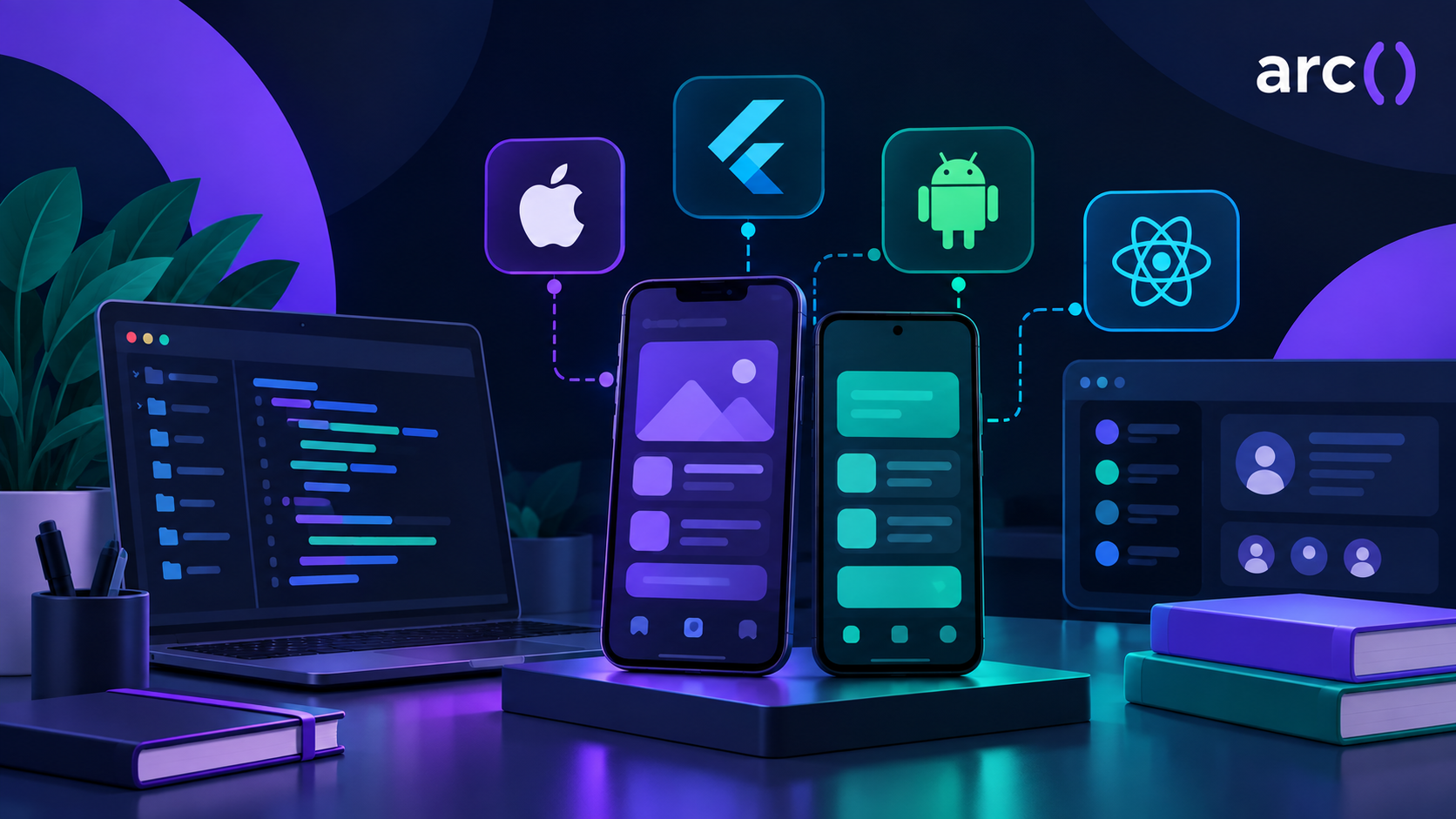

Most bad mobile hires start with one mistake. The team writes “mobile developer” on the job post as if it were one role, when in practice, it is three: iOS developers who work in Swift, Android developers who work in Kotlin, and cross-platform developers who ship both apps from one Flutter, React Native, or Kotlin Multiplatform codebase.
The mismatch gets expensive fast. Say you hire a strong React Native developer for a fitness app, then learn in month two that your core feature needs deep HealthKit access and background Bluetooth syncing with a wearable. Your developer now writes native bridge code they have never shipped, and your launch date slips.
For most US startups and growing companies, the best place to hire mobile app developers is a vetted talent network, because you meet interview-ready candidates in days. Save open marketplaces like Upwork for small, well-defined fixes you can check yourself.
We judge every platform below on two points. First, does its vetting test mobile-specific skills, such as shipped apps, App Store and Play Store submission experience, and platform limits like memory, battery, and background tasks? Second, what happens in writing if the hire doesn’t work out? By the end, you can pick a platform, screen your shortlist, and budget with real numbers.
In this guide:
- Which Hiring Platform Fits Your Mobile App Project?
- Platforms for Curated Matches and Hiring Support
- Screened Networks Without Published Mobile Vetting
- Platforms for Flexible Sourcing and Direct Outreach
- When Does a Mobile App Development Agency Make Sense?
- How Do You Assess a Mobile Developer Before Hiring?
- How Much Does Hiring a Mobile App Developer Cost?
- Frequently Asked Questions
Which Hiring Platform Fits Your Mobile App Project?
The right platform depends on two things you can decide today: how much screening you want done for you, and which kind of mobile developer your app needs. Start with the comparison below, then match your shortlist to your platform choice.
Compare Hiring Models, Vetting, Speed, and Replacement Terms
Vetted networks do the first rounds of screening, while open marketplaces hand that work to you. Here is how four common options stack up on the points that affect a mobile hire.
| Criteria | Arc | Toptal | Upwork | Lemon.io |
| Hiring model | Freelance (hourly) or full-time (pay per hire) | Freelance and full-time through a matched network | Open marketplace; you post and screen | Vetted freelance matching |
| Mobile-specific vetting depth | Profile review, video intro, coding challenge or ~1-hour technical interview; domain expertise and English screened | Language and personality screen, timed skill tests, live technical interview, test project; ~top 3% accepted | None by platform; you check portfolios and reviews | Platform screening of skills and experience before matching |
| Rate range | $60 to $100+ per hour for freelance mobile work; median $61 to $80 | Fixed hourly or weekly price quoted per engagement; no published range | Set by each freelancer | Set per developer; published on quotes |
| Replacement or guarantee | $0 until you hire; recruiter support on matching; confirm replacement terms in your contract | Trial of up to two weeks; not billed if you aren’t satisfied | No replacement; escrow on fixed-price milestones | Trial period and replacement advertised; confirm window in writing |
Arc and Toptal both screen before you see a candidate, but neither screening alone proves someone has shipped a native app. You still need the checks in the assessment section below. On Upwork, the replacement column is empty because the platform doesn’t match you with anyone. It holds your money in escrow while you manage the hire.
The ten platforms in this guide fall into three tiers, sorted by how much screening is done before you meet anyone:
- Curated matches (Arc, Toptal, Turing, Lemon.io): the platform screens candidates, matches them to your role, and helps you hire.
- Screened networks without published mobile vetting (Andela, Gun.io, Braintrust): every candidate passes a general screen, but none of these platforms publish a mobile-specific step, so you run the mobile checks yourself.
- Flexible sourcing (Upwork, Fiverr, Wellfound): you do all the screening.
A fourth route sits outside all three: a mobile app development agency, which delivers a finished app instead of a developer. It gets its own section below.
Match Your Shortlist to iOS, Android, or Cross-Platform Work
Pick the developer type before you pick the platform. Use these triggers:
- Needs ARKit, HealthKit, Apple Pay deep flows, widgets, or Apple Watch → native iOS (Swift, SwiftUI). Cross-platform tools reach these through plugins, and plugins lag Apple’s yearly releases.
- Needs custom background services, deep hardware access, Android Auto, or support for low-end devices common in your market → native Android (Kotlin, Jetpack Compose).
- Content, commerce, booking, or dashboard app on both stores with a shared design → cross-platform (Flutter or React Native). One codebase cuts build and upkeep work.
- Your web team already writes React → React Native. Your engineers can review the code. React Native’s own docs recommend starting new apps with a framework such as Expo, which handles builds and lets developers change native code through plugins.
- You already have a solid Android app in Kotlin and want an iOS version without hiring two separate teams → Kotlin Multiplatform. It lets you share business logic with iOS and adopt it one module at a time, keeping a native SwiftUI interface or using Compose Multiplatform, which JetBrains lists as stable on iOS.
- You need pixel-level custom UI across both platforms → Flutter.
- Heavy real-time audio, video, or Bluetooth on both platforms → two native developers, or one cross-platform lead plus native help.
Once you know the type, filter on it. On a vetted network, tell your recruiter the exact stack (“SwiftUI, HealthKit, App Store release owner”). On a marketplace, put the platform in the job title so general web developers self-select out.
Platforms for Curated Matches and Hiring Support
Curated platforms charge more per hour because you spend less time screening. Each one below vets differently, so compare the mechanics, not the marketing.
- Arc
Arc gives you access to 450,000+ developers across 190 countries, and HireAI shows matched candidates within seconds of you uploading a job description. Candidates pass a profile review, a video intro, and either a coding challenge or a ~1-hour technical interview, as part of the four-step process Arc uses to admit the top 2% of applicants to its network.
On this platform (which screens for domain expertise and English fluency), you can hire a freelance mobile app developer in as little as 72 hours.
Pricing is public. Arc’s mobile app development rates page puts the median freelance mobile rate at $61 to $80 per hour, and Arc’s mobile app developer hiring page says most of its mobile freelancers charge $60 to $100+ per hour. The $15 to $110+ range on Arc’s pricing page covers every role and region on the platform, so budget from the mobile figures. Full-time hires are pay-per-hire and can close in as little as 14 days. You pay $0 until you hire.
A dedicated recruiter helps narrow your shortlist, and Arc handles freelancer payments and compliant global hires through trusted EOR partners. Brief your recruiter on whether you need Swift, Kotlin, or Flutter experience so matches reflect the platform.
Want candidates already screened for mobile work? Tell Arc your stack and meet vetted iOS, Android, and cross-platform developers ready to interview, with $0 due until you hire.
- Toptal
Toptal sits at the premium end of the market, and for teams with budget, it is a strong choice. Applicants go through a language and personality screen, timed skill tests, a live technical interview, and a test project. Roughly the top 3% of applicants get accepted.
Toptal quotes a fixed hourly or weekly price for each engagement and charges no recruiting fee. It publishes no rate range, so ask for quotes on two or three profiles. Each engagement starts with a trial of up to two weeks, and you aren’t billed if you aren’t satisfied.
Pick it when you need a senior native specialist fast, and price is secondary. Still ask for store links and run the ownership questions below; general screening tests coding skill, and you want proof of shipped mobile work.
- Turing
Turing matches companies with remote developers after its own automated skill testing, then builds shortlists without a dedicated recruiter walking you through candidates the way Arc or Toptal do.
It suits teams that want a longer engagement and a steady flow of candidates rather than a one-off hire. Turing’s homepage now leads with AI training data and enterprise AI services, so confirm on your first call that it still takes standalone mobile hires. The platform doesn’t publish a mobile-specific pass rate, so confirm directly how many of your matches actually have mobile-specific test results before you book interviews.
- Lemon.io
Lemon.io focuses on vetted freelance developers for startups, with an emphasis on fast matching and a trial period. It works well when you want one contractor for an MVP. Ask whether its screening includes a mobile task, and get the trial length and replacement terms in writing before work starts.
Screened Networks Without Published Mobile Vetting
These three platforms screen every candidate, so you aren’t starting from zero. None of them publishes a mobile-specific step, though. Treat their screen as proof of general engineering skill, then run the mobile checks in the assessment section yourself.
- Andela
Andela says its network includes more than 150,000 senior technologists across 135 countries (as of July 2026), with a strong base in Africa and Latin America. It fits teams building longer-term engineering capacity more than quick one-off projects, and doesn’t publish a mobile-specific vetting breakdown, so ask directly how mobile skills are screened versus general backend or web engineering.
Check time-zone overlap with your US hours during the first call.
- Gun.io
Gun.io says it starts each engagement with a technology review and delivery-risk assessment, and only places engineers with a verified delivery history on its platform. That’s a real bar, but Gun.io doesn’t publish an acceptance rate, and nothing in its vetting is mobile-specific. Ask each candidate which apps they shipped and what role they held before you rely on the platform’s general vetting alone.
- Braintrust
Braintrust calls itself a vetted talent network, but it doesn’t publish its screening criteria or acceptance rate. Freelancers set their own rates, and clients pay a flat 15% success fee on top, so a $90-per-hour mobile engineer costs you about $103.50 per hour. It draws experienced contractors, including mobile engineers. You still run your own technical screen.
Platforms for Flexible Sourcing and Direct Outreach
Open marketplaces and job boards make sense when your scope is small, your budget is tight, or you have someone who can judge mobile code. You get more choice and lower rates, but you also do all the screening.
- Upwork
Upwork lets you post a job and get bids, or browse freelancer profiles by skill. Fixed-price contracts use milestones with escrow, so you release money when work is done. That protects your budget but does not replace a bad hire.
It works best for bounded tasks: fixing a crash on one Android version, adding push notifications, or preparing an App Store submission.
A self-screening tip for non-technical teams: open every App Store or Play Store link in a portfolio. Then check three things:
- The developer or company name on the listing matches the candidate or a client they name.
- The rating and recent reviews mention stability, not constant crashes.
- The version history shows updates in the last 6 to 12 months.
An app with no updates in two years was likely built by someone who has since moved on.
- Fiverr
Fiverr sells fixed “gigs,” such as “I will build a Flutter app” at a listed price. It fits small, packaged tasks like an icon set, a landing screen, or store listing screenshots. Use the same store-link check before you order anything code-related.
- Wellfound
Wellfound, formerly AngelList Talent, is a startup job board where you post roles and reach out to candidates directly. It works for full-time hires who want equity and startup culture. You own every step, from sourcing to reference checks.
Beyond Platforms: GitHub, Stack Overflow, and Developer Communities
Some of the best mobile developers never list themselves on a hiring platform. You can reach them directly, at no fee, if you’re willing to do the outreach and the screening.
- GitHub. Look at the open-source mobile libraries your app already depends on, such as a Flutter package or a React Native module, and check who maintains them. Their commit history, issue replies, and release notes are a public work sample.
- Stack Overflow. Browse the top answerers in tags like swiftui, android-jetpack-compose, flutter, and react-native. Someone who explains platform limits clearly in writing usually explains them clearly in code review, too.
- Community Slacks and Discords. Kotlin has a community Slack listed on kotlinlang.org, and Flutter lists a Discord, a community Slack, and local meetups on its community page. Read each group’s rules first, since most allow job posts only in a dedicated channel.
Expect a lower reply rate than on a platform, and plan to run every check in the next sections yourself.
When Does a Mobile App Development Agency Make Sense?
An agency sells a finished app instead of a developer. You get a team (usually a project manager, a designer, iOS and Android or cross-platform developers, and QA) working to a statement of work, and the agency manages them for you.
That makes an agency the most practical route for a non-technical founder with no one in-house to manage developers, judge code, or own the release. You pay for that management in a higher total cost, and you have less say over who writes your code.
Before you sign, get four things in writing:
- Who owns the code and the store accounts. The repo, the signing keys, and the developer accounts should be in your company’s name. Apple shows the account holder as the seller on the App Store, so enroll your own organization rather than publishing under the agency’s account.
- Who is actually on your project. Ask for the named developers, and ask what happens if one leaves mid-build.
- What maintenance costs after launch. Yearly OS updates break things, so get the support rate or retainer before the first release.
- How the handoff works. If you later hire your own developer, the agency should hand over documented build steps and full access.
Use the same store-link check as on a marketplace, and ask which of the agency’s apps it still maintains today.
Read more: Hiring Developers Online: Freelance vs Recruitment Agencies vs In-House
How Do You Assess a Mobile Developer Before Hiring?
You verify real native mobile skill with three checks: live store links, a take-home task built around platform limits, and ownership questions about a past app’s numbers. General developers pass coding tests. Mobile developers pass these.
Check Shipped Apps and Platform-Specific Experience
Ask for two or three live App Store or Play Store links, and ask what the candidate built on each one. “I built the onboarding and payments flow in SwiftUI” is useful. “I worked on this app” is not.
Then confirm the platform matches your need:
- iOS hire: Swift, SwiftUI or UIKit, Xcode, TestFlight, and App Store Connect.
- Android hire: Kotlin, Jetpack Compose, Android Studio, and Play Console.
- Cross-platform hire: Flutter, React Native, or Kotlin Multiplatform, plus at least one native bridge or plugin they wrote.
For React Native candidates, ask: “Expo or bare React Native, and why?” A strong answer names a real tradeoff, such as Expo’s managed builds and config plugins versus owning the native iOS and Android projects directly. A developer who has only used one should say so.
Ask about a rejected App Store submission. Anyone who has shipped several iOS apps has a story about one, and how they fixed it tells you a lot.
Test Architecture, Performance, and Release Workflows
Give a small paid take-home task built around a platform limit. Good examples:
- Load a long image list that scrolls smoothly on an older phone.
- Keep a download running when the app goes to the background.
- Handle a lost network connection mid-sync without losing data.
- Request location permission with a clear fallback if the user says no.
These tasks expose people who know web code but not mobile limits. Keep the task to 3 or 4 hours and pay for it.
Then ask about release work. How do they manage signing certificates? How do they roll out an Android update to 10% of users first? What crash reporting tool did they use last?
If you’re running this interview remotely, which most mobile hires are, set up your remote technical interview with the right tools before the call, not during it: a stable connection, shared code access, and a whiteboarding alternative if the take-home task needs one.
Read more: 20+ Web Developer Interview Questions & Answers
Confirm Communication, Ownership, and Time-Zone Overlap
Ask ownership questions about one past app:
- “What was the crash-free rate when you joined, and when you left?”
- “How did you cut cold-start load time?”
- “What was the store rating, and what did you change because of reviews?”
Developers who owned an app answer with numbers. Developers who only filled tickets answer with guesses.
Last, confirm at least 3 to 4 hours of overlap with your US workday. Store rejections and production crashes need same-day answers.
How Much Does Hiring a Mobile App Developer Cost?
Freelance mobile developers on Arc typically cost $60 to $100+ per hour, with a median of $61 to $80, and full-time US salaries sit near the national median for software developers. Your real cost also includes upkeep and the price of a failed hire.
Compare Freelance Rates and Platform Fees
Rates shift by platform model:
| Hiring route | How you pay | What sets the rate |
| Arc freelance | Hourly | $60 to $100+ per hour for mobile work (median $61 to $80), based on skill and region |
| Toptal | Hourly or weekly | Fixed price quoted per engagement; no recruiting fee |
| Upwork | Hourly or fixed milestones | Each freelancer, plus Upwork’s client fees |
| Fiverr | Fixed gig price | Each seller |
Native iOS and Android specialists with years of shipped apps sit at the top of any range. Cross-platform developers cover both stores from one codebase, which lowers total project cost even when the hourly rate matches a native developer’s. Hiring globally also cuts costs; Arc clients, for example, see savings of up to 58% compared with traditional hiring.
Budget for a Full-Time Hire Using Current Salary Data
No official government category covers mobile developers alone. The closest benchmark is the U.S. Bureau of Labor Statistics Software Developers category, which reports a median annual wage of $135,980 as of May 2025, with the lowest 10% earning under $82,460 and the highest 10% earning more than $214,670.
Senior iOS or Android engineers in high-cost US cities earn above that median. Add benefits, payroll taxes, and equipment to the base salary for your true cost.
Full-time hiring through Arc is pay-per-hire, with no upfront cost, and you can hire in as little as 14 days. A remote hire outside the US, placed through an EOR partner, lowers salary costs while keeping you compliant.
See Arc’s remote hiring guide, which covers the compliance and culture side of that tradeoff in more depth.
Account for Maintenance, Handoffs, and Replacement Terms
Budget for work after launch. Apple and Google release new OS versions every year, and each one breaks something. Plan developer hours every fall for updates and testing.
Handoffs cost money too. Ask every contractor to keep code in your repo, document build steps, and hand over signing keys and store account access.
Then check replacement terms before you sign:
- How long do you have to flag a bad fit? Get the exact number of days in writing.
- What does “replacement” mean? A new matched candidate at no fee, a refund, or only a credit?
- Who pays for ramp-up? A new developer needs time to learn the codebase.
Make Your First Test Release Land Inside the Guarantee Window
The one scheduling rule that protects a mobile hire: a trial that ends before your first build reaches real devices tests almost nothing. Plan your first milestone as a TestFlight or Play internal test release, and make sure it lands inside the trial or replacement window.
The window needs to be long enough for real problems to show. Device fragmentation bugs, such as crashes on one Samsung model or layout breaks on small iPhones, often appear only after your first release to real users. Code review and a demo on the developer’s own phone won’t surface them.
Trials are short. Arc’s freelance trial runs up to two weeks, and so does Toptal’s. So scope week one around getting a build out, not around finishing features:
- iOS: TestFlight lets you invite up to 100 internal testers from your team and up to 10,000 external testers.
- Android: A Play Console internal test reaches up to 100 testers, and new builds arrive within minutes.
Get the build onto the oldest and smallest phones your users carry, then judge the developer on how fast they find and fix what breaks. If the trial ends before that happens, ask to extend it or to set the first paid milestone as the test release.
Frequently Asked Questions
What Is the Difference Between Hiring an iOS Developer and an Android Developer?
An iOS developer works in Swift or SwiftUI, builds against Xcode and App Store Connect, and comes from a smaller, higher-rate talent pool. An Android developer works in Kotlin or Jetpack Compose, builds against Android Studio and Play Console, and typically tests across far more device models and OS versions in the wild. The two roles share general mobile concepts but not a codebase; a native iOS developer can’t simply pick up Android work without ramping up on a different language, toolchain, and set of platform constraints.
Should I Hire One Cross-Platform Developer or Two Native Developers?
Hire one cross-platform developer (Flutter or React Native) when your app is content, commerce, booking, or dashboard-style work on both stores with a shared design, since one codebase covers both platforms and cuts build and upkeep costs. If you already have a Kotlin Android app, Kotlin Multiplatform lets you add iOS by sharing that code instead of starting over. Hire two native developers, or a cross-platform lead plus native help, when the app leans on platform-exclusive features like ARKit, HealthKit, Apple Watch, Android Auto, or heavy real-time audio, video, or Bluetooth work, since cross-platform tools reach those through plugins that lag behind each platform’s yearly releases.
How Much Does It Cost to Hire a Mobile App Developer in 2026?
Freelance mobile developers on Arc typically run $60 to $100+ per hour, with a median of $61 to $80, depending on skill and region. Full-time US salaries sit near the national median for software developers, $135,980 as of May 2025 per the Bureau of Labor Statistics, with senior iOS and Android engineers in high-cost cities earning above that. Add benefits, payroll taxes, equipment, and post-launch maintenance to the base rate for your real cost.
What Happens if a Mobile App Developer Hire Doesn’t Work Out?
It depends entirely on what you got in writing before you signed, not what a sales page implies. Ask three questions up front: how many days you have to flag a bad fit, what “replacement” actually means (a new matched candidate at no fee, a partial refund, or only a credit), and who pays for a new developer’s ramp-up time on your codebase. Make sure that window is long enough to surface a mobile-specific problem; device-fragmentation bugs often don’t show up until after your first real release to users, so plan your first milestone to land inside the guarantee period.
Is It Cheaper to Hire a Flutter or React Native Developer Than a Native iOS or Android Developer?
Often yes on total project cost, even when the hourly rate is similar, because one cross-platform codebase covers both the App Store and Play Store instead of paying for two separate native builds and two separate maintenance tracks. That cost advantage shrinks or disappears if the app needs deep platform-specific work, since a cross-platform developer without real native bridge experience will need extra time (or a native specialist’s help) for features cross-platform frameworks don’t cover well.
Choose the Hiring Route That Fits Your Mobile Roadmap
Decide on iOS, Android, or cross-platform first, using triggers like HealthKit or ARKit for native iOS and hardware-heavy features for native Android. Then pick a platform model: a vetted network like Arc or Toptal when you want screened candidates fast, or Upwork and Fiverr for small tasks you can check yourself.
Whichever route you take, verify live store links, run a platform-limit take-home task, and ask about crash rates and store ratings on a past app. Get the replacement window in writing and make sure your first real release lands inside it.
Ready to meet developers who have already shipped mobile apps? Share your stack with Arc, and a recruiter will match you with vetted iOS, Android, Flutter, or React Native developers. Freelance hires can start in as little as 72 hours, full-time hires in as little as 14 days, and you pay $0 until you hire.