

Are you looking to hire a developer but not sure which hiring platform makes the most sense anymore?
You’re not alone. A few years ago, most companies were mainly trying to solve one problem: finding enough developers to interview. In 2026, the problem looks very different.
Now, hiring teams are sorting through:
- AI-generated resumes
- mass-automated job applications
- inflated portfolio projects
- generic outbound recruiting
- and coding assessments that don’t always reflect real-world engineering ability
That’s made hiring signal a lot harder to trust. The good news is that platforms like Arc and Triplebyte are both trying to solve that problem, just in different ways.
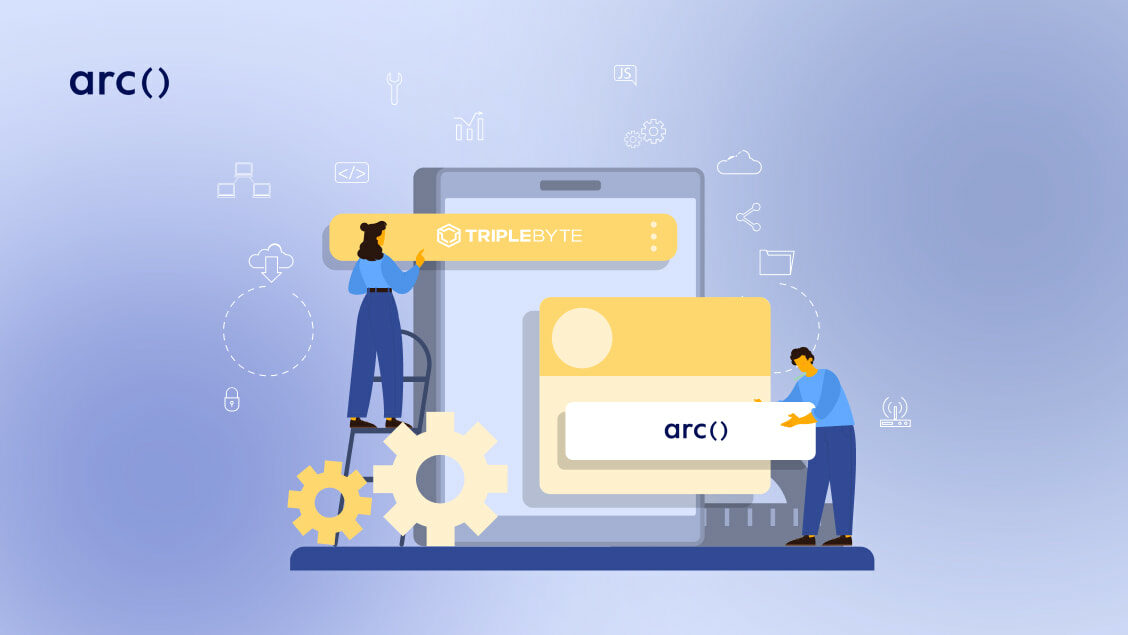
Triplebyte built its reputation around structured engineering assessments and skills-based hiring. Arc takes a broader approach, combining AI-powered matching, human vetting, and recruiter support to help companies hire vetted remote developers faster.
Both platforms can help you hire engineers more efficiently. But depending on how your team hires, one may fit your workflow much better than the other.
Triplebyte became known for its structured engineering assessments and skills-based hiring model. Arc takes a broader approach built around AI-powered candidate matching, human vetting, and remote-first hiring workflows.
Both platforms aim to help companies hire engineers more efficiently. But the way they approach candidate quality, screening, flexibility, and hiring operations is meaningfully different.
If you’re researching the best Triplebyte alternatives for developers or trying to figure out how to hire vetted remote engineers in 2026, this comparison should help you make a more informed decision.
Arc Vs Triplebyte At A Glance
| Feature | Arc | Triplebyte |
| AI-powered candidate matching | Yes | Limited / evolving |
| Human technical vetting | Yes | Assessment-focused |
| Freelance hiring | Yes | Limited |
| Full-time hiring | Yes | Yes |
| Remote-first talent pool | Yes | Yes |
| Async collaboration evaluation | Yes | Limited |
| Recruiter guidance | Hands-on support | More self-serve |
| Global hiring support | Yes | Yes |
| Trial period options | Yes | Varies |
| Best for | Startups hiring vetted remote talent quickly | Teams prioritizing standardized assessments |
Arc And Triplebyte Founders On Hiring Engineers
One useful way to understand these platforms is by looking at the hiring philosophies behind them. Their workflows make more sense once you understand the problems each company originally set out to solve.
Arc Mission
“We believe you don’t have to live in a tech hub to do great work.”
— Weiting Liu, Co-founder & CEO of Arc
Arc’s mission has consistently focused on reducing friction in remote hiring. The company was built on the idea that talented developers are everywhere, but traditional hiring systems still make global hiring unnecessarily slow, expensive, and operationally burdensome.
That philosophy feels even more relevant in 2026.
Today, startups increasingly care less about geographic proximity and more about:
- hiring speed
- engineering quality
- communication ability
- async collaboration
- hiring flexibility
- and cost-efficient access to specialized talent
Arc positions itself around solving those problems through a combination of:
- AI-powered candidate matching
- a vetted global talent network
- recruiter support
- and remote hiring infrastructure
Instead of functioning like a giant resume database, Arc tries to reduce sourcing and screening overhead by surfacing interview-ready candidates earlier in the hiring process.
Triplebyte Mission
“It’s time for a hiring platform that puts engineers in control.”
— Triplebyte founders Harj Taggar, Guillaume Luccisano, and Ammon Bartram
Triplebyte originally differentiated itself through standardized technical assessments.
At a time when engineering hiring relied heavily on pedigree signals — elite universities, big-name employers, and referral networks — Triplebyte pushed for more skills-based evaluation.
That approach helped popularize engineering assessments as a core part of hiring infrastructure.
Its model appealed especially to:
- engineering-led hiring teams
- technically rigorous interview cultures
- companies trying to reduce resume bias
- organizations wanting more structured candidate evaluation
Even today, Triplebyte remains closely associated with assessment-driven engineering recruiting.
Hiring Developers In 2026: Why Vetting Looks Different Now
Hiring developers used to feel more straightforward: Review resumes, run coding interviews, check experience, make an offer.
Now? Almost every developer already uses AI tools daily.
Candidates can use AI to improve resumes, generate portfolio projects, prepare for interviews, and even complete take-home assignments. That doesn’t necessarily mean they’re bad engineers — AI-assisted development is normal now — but it does make hiring a lot noisier.
As a result, companies are paying more attention to signals that are harder to fake.
Things like:
- communication ability
- debugging skills
- architecture thinking
- async collaboration
- ownership mentality
- production experience
- and the ability to work effectively with AI coding tools instead of relying on them blindly
This shift matters especially for startups. Small engineering teams can’t afford long onboarding cycles or hires that require heavy oversight. One weak engineering hire can slow product velocity for months.
That’s why many companies are moving away from purely resume-based filtering or quiz-heavy hiring systems and looking for platforms that surface stronger candidates earlier in the process. This is where Arc and Triplebyte start to differ more noticeably.
Comparison Of Project Types Supported: Triplebyte Vs Arc
Arc Project Types
Arc supports multiple hiring models:
- Full-time hires
- Freelance developers
- Contract-to-hire roles
- Fractional technical specialists
- Short-term project staffing
- Long-term remote team building
That flexibility has become much more important over the last few years, as many startups no longer hire entirely through traditional permanent headcount expansion.
Instead, they increasingly mix:
- full-time core engineers
- specialized contractors
- temporary migration experts
- AI infrastructure consultants
- and remote product teams
A startup might:
- bring in a senior DevOps engineer for a cloud migration
- hire a contract AI engineer for a six-month initiative
- scale frontend capacity temporarily before launch
- or test a contractor relationship before extending a full-time offer
Arc’s hiring model supports those workflows more naturally than platforms built primarily around traditional permanent hiring. The platform also emphasizes remote-first hiring.
That matters because many startups in 2026 are optimizing for:
- global talent access
- faster hiring cycles
- timezone flexibility
- lower hiring costs
- and specialized expertise outside local markets
Arc’s broader hiring flexibility can help startups adapt their hiring strategy based on:
- funding stage
- roadmap volatility
- hiring urgency
- and recruiter bandwidth
Triplebyte Project Types
Triplebyte primarily focuses on engineering recruiting and developer evaluation workflows tied to longer-term hiring.
Companies can:
- post engineering roles
- evaluate technical assessments
- review candidate profiles
- manage engineering recruiting workflows
Compared to Arc, Triplebyte generally leans more heavily into assessment infrastructure and technical screening rather than flexible staffing models.
That may work well for companies that:
- already have mature internal recruiting systems
- have dedicated technical recruiting teams
- prefer highly structured interview workflows
- want to control more of the evaluation process internally
However, startups with lean recruiting operations may find self-managed hiring systems more operationally heavy. That’s particularly true when engineering leaders already have limited interview bandwidth.
Which Platform Fits Better?
Arc may be a stronger fit if:
- you need vetted developers quickly
- your recruiting team is small
- you hire remote-first teams
- you want freelance and full-time flexibility
- you need specialized developers on demand
- you want recruiter support throughout hiring
- you care about communication and async collaboration quality
- You want fewer but more curated candidates
Triplebyte may fit better if:
- your engineering org already has strong internal interview systems
- your team prefers structured engineering assessments
- you want to manage more of the evaluation process internally
- your hiring process is already engineering-led
- your organization values standardized evaluation frameworks heavily
Developer Vetting Process Comparison: Triplebyte Vs Arc
Arc Vetting Process
Arc’s vetting process is designed to help companies skip a lot of the early filtering work. Instead of reviewing hundreds of resumes manually, hiring teams get access to developers who have already been evaluated for:
- technical ability
- communication skills
- remote work readiness
- and practical engineering experience
Depending on the role, Arc’s process may include:
- live technical interviews
- pair programming sessions
- framework-specific assessments
- portfolio and GitHub reviews
- async communication exercises
- architecture discussions
- and debugging scenarios
One thing that stands out about Arc’s approach is that it goes beyond coding quizzes alone.
That matters more now than it did a few years ago. In 2026, most experienced developers can use AI coding tools to speed up implementation. But companies still need engineers who can:
- reason through technical tradeoffs
- review AI-generated code critically
- communicate clearly with distributed teams
- and solve messy production problems
Arc’s hybrid model — combining AI-powered matching with human vetting and recruiter oversight — is designed around surfacing those higher-signal qualities earlier in the hiring process.
For startups especially, that can reduce a lot of recruiter overhead and interview fatigue.
Triplebyte Vetting Process
Triplebyte originally became known for standardized technical assessments and engineering-focused screening.
Its platform helped popularize:
- skills-based engineering evaluation
- structured technical assessments
- standardized candidate benchmarking
- engineering-first recruiting workflows
At the time, this was genuinely differentiated, as many traditional hiring systems still relied too heavily on resumes and credential filtering.
Triplebyte’s assessment-centric approach helped companies evaluate technical ability more objectively. However, engineering hiring has evolved substantially since then, and today, companies increasingly evaluate developers beyond coding assessments alone.
Modern engineering teams also care deeply about:
- collaboration quality
- production experience
- AI-assisted development workflows
- ownership mentality
- communication ability
- system design judgment
- and remote work compatibility
As a result, many organizations now supplement assessment-based recruiting with deeper contextual interviews and practical engineering evaluations.
That doesn’t make structured assessments obsolete. It simply means they’re no longer sufficient on their own for many teams.
Reviewing The Developer Hiring Process At Arc And Triplebyte
Arc Hiring Process
Arc positions itself around reducing sourcing and screening overhead. The workflow is designed to help startups spend less time manually filtering applications and more time interviewing candidates who already fit their requirements reasonably well.
A typical Arc hiring process looks something like this:
- Define hiring needs
- Receive AI-assisted candidate matches
- Review vetted developer profiles
- Conduct interviews
- Hire full-time or contract talent
Arc also provides support around:
- global hiring logistics
- international payroll
- compliance workflows
- contractor management
- remote onboarding
That infrastructure matters more than many founders initially expect, as cross-border hiring becomes operationally complex quickly once startups begin scaling internationally.
Arc also emphasizes speed. Many startups now expect engineering hiring cycles measured in weeks rather than quarters.
The platform’s goal is to reduce:
- recruiter screening time
- sourcing delays
- candidate search overhead
- interview coordination burden
- and overall hiring friction
A growing number of startups also use Arc specifically for:
- AI engineering hires
- infrastructure specialists
- DevOps engineers
- platform engineers
- product-focused full-stack developers
- startup generalists
Triplebyte Hiring Process
Triplebyte’s workflow generally centers around:
- engineering job postings
- technical assessment visibility
- candidate applications
- engineering evaluation workflows
Companies review candidate profiles and assessment data before progressing candidates through their own hiring process.
Compared to Arc’s more curated approach, Triplebyte’s workflow may feel:
- more self-serve
- more assessment-oriented
- more internally managed
For organizations with mature recruiting operations, that may be perfectly fine. But for smaller startups where founders and engineering leads already handle recruiting personally, additional operational overhead can become expensive quickly.
That’s especially true when:
- recruiter bandwidth is limited
- engineering managers are overloaded
- hiring urgency is high
- or hiring pipelines produce too many low-quality applicants
AI Hiring Agents Vs Human Curation: What Actually Works?
One of the biggest recruiting shifts over the last two years has been the rise of AI hiring agents.
Many hiring platforms now promise:
- autonomous sourcing
- automated outreach
- AI-driven ranking
- AI resume filtering
- AI-generated interview summaries
- autonomous recruiting workflows
Some of these tools are genuinely useful, but many hiring teams are also discovering an unexpected problem: Automation alone often increases noise.
Why? Because candidates are also using AI heavily.
Developers now use AI to:
- optimize resumes
- tailor applications automatically
- generate portfolio projects
- prepare for interviews
- complete take-home assignments
- mass-apply across platforms
That creates an “AI vs AI” recruiting problem where application volume increases faster than hiring signal quality. As a result, many startups are moving away from purely automated recruiting systems and toward hybrid hiring models.
That’s where Arc’s positioning increasingly makes sense.
The platform combines:
- AI-powered matching for speed
- human vetting for quality control
- recruiter guidance for nuance and context
That balance can help reduce:
- low-signal candidate pipelines
- recruiter overload
- interview fatigue
- and hiring mistakes
Especially for startups, the cost of a weak engineering hire is often much higher than the cost of slowing down slightly to improve candidate quality.
Cost To Hire Developers Using Triplebyte Or Arc
Arc Pricing
Arc uses flexible pricing depending on:
- hiring type
- developer seniority
- specialization
- geography
- contract structure
- and engagement duration
For full-time hiring, companies typically pay a placement fee after successfully making a hire. For contract hiring, developers set hourly or project-based rates depending on expertise and specialization.
One operational advantage of Arc’s model is flexibility.
Companies can:
- hire full-time
- start contract-first
- scale engineering capacity gradually
- test working relationships before committing permanently
- and hire globally based on budget and specialization needs
That flexibility is especially useful for startups balancing:
- runway constraints
- uncertain roadmap priorities
- rapid growth
- and evolving technical needs
Arc also helps reduce sourcing and screening overhead, which can lower indirect recruiting costs significantly. That matters because the true cost of engineering hiring is rarely just placement fees.
It also includes:
- recruiter time
- engineering interview hours
- hiring delays
- product roadmap slowdown
- and opportunity cost
Triplebyte Pricing
Triplebyte’s pricing structure and platform offerings have evolved over time. Public pricing visibility remains somewhat limited depending on the hiring model and engagement type.
Companies evaluating Triplebyte generally need to:
- speak with sales
- request demos
- review platform capabilities directly
Compared to platforms emphasizing curated matching and recruiter guidance, Triplebyte tends to position itself more around engineering assessment workflows and recruiting infrastructure.
Trial Periods & Hiring Guarantees
Arc
Arc offers support structures designed to reduce hiring risk. That’s especially important for startups where a single bad engineering hire can have an outsized impact.
Depending on the hiring type, support may include:
- contractor trial periods
- replacement guarantees
- recruiter guidance
- onboarding assistance
- post-hire support
These workflows can help companies feel more comfortable hiring globally or hiring remotely for the first time.
Triplebyte
Trial periods and guarantees may vary depending on the hiring model and platform offering.
Companies evaluating Triplebyte should confirm:
- replacement policies
- onboarding expectations
- support availability
- and hiring guarantees during evaluation
Best Triplebyte Alternatives For Developers And Startups In 2026
If you’re researching the best Triplebyte alternatives for developers, several major platforms compete in this space.
The right choice depends heavily on:
- hiring speed needs
- recruiter bandwidth
- budget
- engineering specialization
- staffing flexibility
- and internal hiring maturity
- Arc
Best for:
- startups
- remote-first hiring
- flexible staffing
- vetted global developers
- fast-moving engineering teams
- companies with lean recruiting operations
Arc’s biggest differentiator is its combination of:
- AI-assisted matching
- human vetting
- recruiter support
- and remote hiring infrastructure
That hybrid model aligns particularly well with modern startup hiring workflows. Instead of simply maximizing candidate volume, Arc focuses on improving hiring signal quality while reducing recruiting overhead.
- Toptal
Best for:
- highly specialized freelance expertise
- premium consulting talent
- niche technical projects
- senior-level independent professionals
Toptal is known for rigorous screening and premium talent positioning. Companies often use Toptal when they need highly specialized expertise quickly and are comfortable paying premium rates for that access.
Compared to broader hiring marketplaces, Toptal generally focuses more on elite freelance consulting engagements than on flexible startup hiring workflows.
- Turing
Best for:
- enterprise engineering scaling
- large remote engineering teams
- AI-driven matching workflows
- distributed technical hiring
Turing positions itself heavily around AI-powered matching and large-scale remote engineering access. Its model tends to appeal more to organizations scaling distributed teams aggressively across multiple regions.
- Hired
Best for:
- inbound recruiting workflows
- employer branding
- marketplace-style hiring
- tech candidate discovery
Hired focuses more heavily on candidate marketplaces and employer-candidate matching workflows. Its model may appeal more to companies that already have strong internal recruiting operations and simply want additional candidate flow.
Skills-Based Hiring Platforms Comparison: What Actually Matters?
Many hiring platforms now market themselves as “skills-based.” But that phrase can mean very different things depending on the platform.
Some systems define skills-based hiring primarily through:
- coding assessments
- technical quizzes
- algorithm performance
- standardized evaluations
Others evaluate broader engineering effectiveness, including:
- communication
- collaboration
- practical delivery ability
- architecture judgment
- production readiness
- and remote work capability
In practice, startups increasingly care about the second category. Why? Because engineering work itself has changed.
With AI coding tools accelerating implementation speed, companies increasingly differentiate engineers based on:
- decision-making quality
- product understanding
- debugging ability
- reliability
- ownership
- and communication
The best developer hiring platforms in 2026 are increasingly the ones that can identify those higher-order signals earlier in the recruiting process.
Arc Vs Triplebyte: Which Is Better For Hiring Developers In 2026?
Both Arc and Triplebyte solve real hiring problems, but they optimize for different priorities. Triplebyte historically focused on structured technical assessment and skills-based engineering evaluation.
Arc takes a broader approach centered around:
- AI-powered matching
- human vetting
- remote hiring infrastructure
- recruiter guidance
- and flexible staffing workflows
For startups hiring in 2026, the challenge is no longer simply finding developers.
It’s identifying engineers who can:
- operate effectively with AI tools
- collaborate remotely
- contribute quickly
- communicate clearly
- and perform reliably in fast-moving environments
That’s where higher-signal vetting and curated matching increasingly matter.
If your team wants:
- vetted remote developers
- fewer low-quality applications
- flexible hiring models
- faster hiring workflows
- recruiter support
- and operational hiring guidance
Arc may offer the stronger overall hiring experience.
If your organization prefers:
- highly structured engineering assessments
- standardized evaluation systems
- and more self-managed recruiting workflows
Triplebyte may still be worth evaluating.
Either way, the best developer hiring platforms in 2026 are increasingly those that reduce hiring noise and improve hiring confidence. That’s ultimately what modern engineering recruiting teams care about most.
If you’re looking for a faster way to meet vetted remote developers without spending weeks filtering applications, Arc can help. Review interview-ready candidates, talk directly with developers, and make your next engineering hire with more confidence.
⚡️ Access 450,000 top developers, designers, and marketers
⚡️ Vetted and ready to interview
⚡️ Freelance or full-time
Try Arc and hire top talent now →
Frequently Asked Questions
What is the best Triplebyte alternative for developers?
Arc is one of the strongest Triplebyte alternatives for startups and remote-first companies because it combines AI-powered matching with human technical vetting and recruiter support.
Other major alternatives include Toptal, Turing, and Hired, depending on hiring goals and budget.
How much does it cost to hire developers on Arc?
Costs vary depending on:
- developer seniority
- specialization
- hiring model
- geography
- engagement duration
Arc supports both full-time and contract hiring models, giving companies more flexibility compared to platforms focused primarily on permanent hires.
Is Arc better than Triplebyte for remote hiring?
For many remote-first startups, Arc may be a stronger fit because its workflows are designed around:
- global hiring
- vetted remote developers
- async collaboration
- flexible staffing
- and recruiter-assisted hiring
Triplebyte tends to lean more heavily toward structured technical assessments and self-managed engineering recruiting workflows.
How do AI hiring platforms affect engineering recruiting in 2026?
AI hiring platforms can dramatically improve sourcing speed. However, many companies are discovering that automation alone often increases hiring noise.
The strongest engineering hiring workflows in 2026 typically combine:
- AI-assisted matching
- human vetting
- technical evaluation
- recruiter oversight
- and practical engineering assessments
That hybrid approach generally produces stronger hiring outcomes than relying entirely on automation alone.
Disclaimer: Arc does not claim ownership of the mentioned platforms’ logos, slogans, and trademarks, which were used for descriptive purposes only and belong to their respective owners. We are not affiliated with or sponsored by the platforms mentioned in this post. The information provided is based on our research, and we do not claim that any of it has been approved by third parties (e.g., the platforms mentioned in this post). Platform service offers also change over time. We encourage all readers to do their own research.