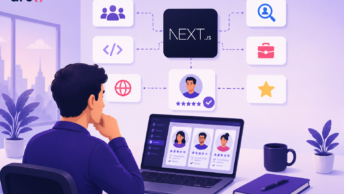



Hiring great marketers has always been hard, but in 2026, it’s structurally different. AI has changed how talent is sourced, screened, and evaluated. The bottleneck is no longer finding candidates, but identifying who can actually perform.
If you’re still relying on manual sourcing and resume filtering, you’re operating with an outdated playbook. Today, teams using platforms like Arc—and their own AI hiring workflows—are moving faster and making higher-signal hires.
That shift raises two critical questions:
- How do you hire marketing talent with AI without increasing noise?
- When does a recruitment agency actually add value?
This guide answers both, covering the best marketing recruitment agencies for startups, how to vet them properly, the real cost of using a marketing recruiter, and why skills-based hiring is now the standard.
Why Hiring Marketing Talent Feels Broken Right Now
Before diving into agencies, it’s worth addressing the root problem: most companies aren’t struggling to find candidates anymore. AI has solved that. They’re struggling to answer a much harder question: “Which of these candidates will actually perform?”
That’s a signal problem, not a sourcing problem. AI can generate hundreds of “qualified” candidates in minutes. But:
- Resumes are inflated
- Titles are inconsistent
- Portfolios are curated (not always representative)
- AI-generated work blurs real skill vs assisted output
So while hiring has become faster, it has also become noisier. This is why agencies still exist and why only some of them remain valuable.
How to Hire Marketing Talent with AI (Without Breaking Your Hiring Process)
Most articles discuss AI in hiring at a surface level, but that’s not very useful. What matters is how AI actually fits into your workflow. A modern hiring system typically looks like this:
Step 1: AI Builds the Talent Map
AI tools scan global talent pools, pulling candidates from:
- Portfolio sites
- Past applicants
- Freelance platforms
This alone replaces hours (or days) of manual sourcing.
Step 2: AI Ranks Candidates
Instead of keyword matching, better systems now evaluate:
- Role relevance
- Skill signals
- Experience patterns
- Engagement likelihood
At this stage, you already have a shortlist, but it’s still imperfect.
Step 3: Humans Define What “Good” Looks Like
This is where most companies fail. If your hiring criteria is vague (“growth mindset,” “strong communicator”), AI cannot help you.
You need:
- Clear skill definitions
- Specific success metrics
- Role-specific expectations
Step 4: Agencies (Optional) Add Signal
This is the only place where agencies still justify their cost.
They should:
- Validate candidate quality
- Interpret ambiguous signals
- Pressure-test real-world ability
If they’re just sending resumes, they’re redundant.
Step 5: Final Decision Stays In-House
AI and agencies support decisions, but don’t replace them. AI can surface candidates and structure evaluation, while agencies can add context and judgment, but the final hiring decision still depends on your team’s definition of what “good” actually looks like.
Skills-Based Hiring for Marketing Roles (The Biggest Shift You Can’t Ignore)
If there’s one concept that should anchor your entire hiring strategy, it’s this: Skills-based hiring for marketing roles is no longer optional; it’s the default. The reason is simple: marketing titles have become meaningless.
A “growth marketer” at one company might:
- Run paid ads
At another, they might:
- Own the entire funnel
- Define strategy
- Lead experimentation
Same title. Completely different skill sets.
What Skills-Based Hiring Actually Looks Like
Instead of filtering candidates by surface-level proxies like past companies, job titles, or years of experience, you evaluate them based on demonstrated ability and real output.
That means looking at:
- What they’ve built (campaigns, funnels, content systems, growth loops)
- What they’ve improved (conversion rates, CAC, pipeline, retention)
- What they can execute today (tools, channels, and workflows they actively use)
In practice, this shifts your process from resume review to evidence-based evaluation:
- Reviewing actual campaign performance, not just role descriptions
- Asking candidates to break down how they achieved results
- Validating tool fluency (e.g., analytics, CRM, AI tools) through real examples
The goal isn’t to find the “most experienced” candidate, but the one who can deliver outcomes in your specific context.
Example: Content Marketing Role
Old approach: “We need a content marketer with 5+ years of experience.”
Modern approach: “We need someone who can build an SEO-driven growth engine, use AI to scale content production, and improve conversion rates.”
That shift changes:
- Who you hire
- How you evaluate
- What success looks like
Why This Matters for Agencies
If an agency cannot:
- Evaluate campaign performance
- Break down real marketing work
- Distinguish strategy from execution
Then they are operating at a pre-2024 level.
AI Hiring Agents vs. Traditional Agencies (What Each Is Actually Good At)
This comparison is often framed incorrectly. It’s not really AI vs. agencies, but automation vs. judgment, as they solve very different parts of the hiring problem.
Where AI Hiring Agents Dominate
AI hiring agents are fundamentally better at handling volume and structure.
They can:
- Scan and source candidates across global talent pools in minutes
- Rank candidates using consistent, predefined criteria
- Apply the same evaluation logic across hundreds of profiles without fatigue
- Reduce the cost and time required to build a pipeline
This makes AI especially effective when the hiring problem is well-defined.
Use AI when:
- You need to build a pipeline quickly
- The role is repeatable (e.g., SEO specialist, paid media manager)
- The requirements are clear and measurable (channels, tools, KPIs)
In these cases, the challenge isn’t finding candidates; it’s processing them efficiently, which is exactly what AI is optimized for.
Where Traditional Agencies Still Matter
Agencies add value where structure breaks down, and judgment becomes critical.
They’re better at:
- Interpreting messy or ambiguous candidate signals
- Evaluating strategic thinking, not just execution
- Assessing communication, storytelling, and cross-functional fit
- Engaging and closing passive candidates
This matters most when the role is not easily defined upfront.
Use agencies when:
- The role is ambiguous or evolving
- Success depends on judgment, not just execution
- The hire is high-risk or high-impact
For example:
- Head of Growth
- Product Marketing Lead
- CMO
In these cases, the problem isn’t sourcing candidates, but choosing the right one, and that requires human calibration.
The Reality: High-Performing Teams Use Both
The strongest hiring teams don’t choose between AI and agencies; they design a system that uses each where it performs best.
In practice:
- AI handles pipeline generation and initial filtering
- Agencies help interpret edge cases and validate top candidates
- Internal teams make the final decision based on context and goals
AI and agencies support decisions, but don’t replace them. They can narrow the field and improve signal, but defining what “good” looks like—and making the final call—still sits with your team. That combination is what turns faster hiring into better hiring.
Best Marketing Recruitment Agencies for Startups and Tech Companies
Let’s move past generic lists. What matters is when and why you would use each agency.
Arc
Arc is one of the strongest options for startups because it aligns closely with how modern tech teams actually hire: fast, globally, and increasingly alongside AI-driven workflows.
It’s not a traditional recruiter, as it operates more like a curated talent marketplace, giving you access to pre-vetted candidates who are ready to interview quickly, often within days rather than weeks.
Where it fits best:
- Remote-first teams hiring globally
- Product-led companies where marketing works closely with engineering and product
- Startups that need to move quickly without building a full recruiting function
What makes it relevant in 2026: Arc works particularly well in an AI-first hiring setup. You can use AI hiring agents to generate and rank candidates, then use the platform as a high-quality shortlist layer to reduce time spent filtering out noise.
AI and modern hiring practices:
- Not fully “agentic AI-native,” but highly compatible with AI workflows
- Emphasis on vetted candidates, though vetting depth varies by role
- Strong for execution and mid-level roles where speed matters
Where to be careful:
Don’t confuse “vetted” with “fully validated.” You still need:
- A clear role scorecard
- Defined success metrics
- Structured interviews
Arc accelerates hiring, but it doesn’t define what “good” looks like for you.
MarketerHire
MarketerHire combines AI-assisted matching with a curated marketing talent network. Its core value proposition is speed: you can typically get matched with a candidate in days, sometimes within 48 hours.
Where it fits best:
- Freelance or fractional marketing roles
- Short-term execution gaps (paid ads, SEO, lifecycle, content)
- Teams that need immediate capacity without long hiring cycles
What makes it relevant in 2026: MarketerHire is optimized for efficient, at-scale matching, using AI to pair companies with marketers based on role requirements and past performance signals.
AI and modern hiring practices:
- Strong use of AI in candidate matching and ranking
- Relies on structured data inputs to improve fit
- Still heavily dependent on pre-existing role clarity
Important nuance: MarketerHire is excellent at answering “Who fits this role description?” but less strong at answering “Is this the right role definition in the first place?”
Where to be careful:
- Limited depth for strategic or ambiguous roles
- You need strong internal judgment to evaluate final candidates
- Risk increases if the role is not clearly scoped
Mayple
Mayple positions itself as a data-driven marketing talent platform, with a strong emphasis on performance marketing. It is most effective when hiring decisions can be tied directly to measurable outcomes, like:
- CAC
- ROAS
- Conversion rates
Where it fits best:
- Paid acquisition and growth marketing roles
- Teams with clearly defined performance goals
- Companies optimizing specific funnel stages
What makes it relevant in 2026: Mayple leans heavily into algorithmic matching, using data to connect companies with marketers who have demonstrated results in similar contexts.
AI and modern hiring practices:
- Strong emphasis on data and matching logic
- Focus on measurable outcomes rather than credentials
- Less focus on qualitative or strategic evaluation
Where to be careful:
- Less suited for brand, content, or product marketing roles
- Matching quality depends heavily on available performance data
- Limited ability to evaluate creative judgment or long-term thinking
Mondo
Mondo sits at the intersection of marketing, technology, and data, making it more relevant as marketing roles become increasingly technical.
It’s particularly useful when hiring for roles that require hands-on experience with:
- Marketing automation platforms
- Analytics tools
- CRM systems
- MarTech stacks
Where it fits best:
- Marketing operations
- Demand generation
- Analytics-heavy roles
What makes it relevant in 2026: As marketing becomes more systems-driven and AI-enabled, agencies like Mondo benefit from their ability to source candidates with technical fluency, not just marketing experience.
AI and modern hiring practices:
- Moderate adoption of AI in sourcing and matching
- Strong alignment with technical marketing roles
- Less transparency on validation depth
Where to be careful:
Because tool familiarity ≠ execution ability, you need to explicitly ask:
- Are candidates hands-on or just tool-aware?
- How is technical depth validated?
MarketPro
MarketPro is a specialist executive search firm, focused on senior marketing leadership roles. This is not a platform you use for speed, but one you use when the cost of a bad hire is extremely high.
Where it fits best:
- CMO
- VP Marketing
- Head of Growth
What makes it relevant in 2026: Even in an AI-driven world, executive hiring remains judgment-heavy. AI can support sourcing, but it cannot reliably evaluate leadership capability, influence, or strategic vision.
AI and modern hiring practices:
- Primarily human-driven
- Focused on deep evaluation rather than automation
- Less emphasis on speed, more on precision
Where to be careful:
- Long hiring timelines (often 8–12+ weeks)
- High cost
- Overkill for mid-level or execution roles
Aquent, Robert Half, And Adecco
These firms represent large-scale, generalist staffing organizations.
Their advantage is clear:
- Massive candidate networks
- Global reach
- Established processes
But that advantage comes with tradeoffs.
Where they fit best:
- High-volume hiring
- Multi-region or local hiring
- Broad marketing roles (not niche or specialized)
What makes them relevant in 2026: Many of these firms have started integrating AI-assisted matching and screening, but the level of sophistication varies widely.
AI and modern hiring practices:
- AI is often used for resume parsing and candidate ranking
- Less emphasis on skills-based validation
- Processes may still rely heavily on traditional recruiting workflows
Where to be careful:
These firms are less effective when:
- You need niche expertise
- You require deep candidate validation
- You’re building a high-performance startup team
In those cases, scale becomes a disadvantage because it increases noise rather than improving signal.
Vetting Marketing Agencies for Tech Companies (What Actually Matters)
Most companies still evaluate agencies using outdated criteria.
They ask:
- “How big is your network?”
- “How fast can you send candidates?”
These questions made sense when sourcing was the bottleneck, but that’s no longer the case.
The Questions That Actually Matter
- How do you use AI in your hiring process?
Not:
“Do you use AI?”
But:
- Where exactly in the workflow is AI applied?
- Is it used for sourcing, matching, screening, or validation?
- What measurable improvements does it create?
You’re looking for specific, operational answers, not buzzwords.
- How do you validate candidate skills?
This is the most important question.
Strong agencies will describe:
- Campaign breakdowns
- Work sample reviews
- Role-specific assessments
- Structured evaluation frameworks
Weak agencies will rely on:
- Resume screening
- Keyword matching
- Past company prestige
- Can you integrate with our AI hiring workflow?
Modern hiring is not agency vs AI; it’s agency + AI.
You need to know:
- Can they work with your AI-generated candidate lists?
- Can they provide structured data (not just resumes)?
- Can they plug into your ATS or hiring systems?
If they can’t, they will slow you down.
- How do you measure success?
Avoid activity-based metrics like:
- Number of candidates sent
- Speed of delivery
Focus on outcome-based metrics:
- Interview-to-hire ratio
- Candidate quality
- Retention and performance
Because ultimately, you’re not paying for candidates, you’re paying for better hiring decisions.
Cost of Using a Marketing Recruiter (What You’re Actually Paying For)
The cost of using a marketing recruiter is often misunderstood because most companies focus only on visible fees rather than outcomes.
Surface-Level Costs
At a glance, pricing typically falls into a few models:
- Contingency: 15–30% of first-year salary, paid only if you hire
- Retained search: higher fees with upfront or milestone payments, usually for senior roles
- Subscription platforms: ~$5K+/month for ongoing access to talent pools
These are easy to compare, but they don’t tell you much about value.
Hidden Costs (Much More Important)
Where things get expensive is in poor hiring outcomes, not recruiter fees.
- Time wasted on poor candidates: Interviewing low-signal candidates drains team bandwidth
- Mis-hires: One bad marketing hire can cost months of lost pipeline and execution
- Slow hiring cycles: Delays compound, especially in growth or revenue-critical roles
- Opportunity cost: An unfilled role often costs more than the recruiter fee itself
These costs are harder to measure, but far more impactful.
The Real Insight
You’re not paying for candidates, but for better decisions. A cheaper recruiter that sends weak candidates is more expensive in the long run. A higher-cost agency that consistently delivers high-signal, well-matched candidates can reduce total hiring cost.
If an agency doesn’t improve your ability to make the right hire, it’s overpriced; regardless of what it charges.
Who Should NOT Use Recruitment Agencies
Agencies are not always the right choice.
Avoid them if:
- You’re an early-stage startup with a limited budget
- You already have strong AI hiring workflows
- You’re hiring high-volume, repeatable roles
In these cases, AI is usually more efficient.
How the Best Teams in 2026 Hire Marketers, And Where Arc Fits In
The companies that win in hiring aren’t the ones with the best recruiters, but the ones with the best decision-making systems.
In 2026, that means:
- Knowing how to hire marketing talent with AI
- Applying skills-based hiring for marketing roles
- Being rigorous about vetting marketing agencies for tech companies
- Understanding the real cost of using a marketing recruiter
- Combining AI, internal teams, and agencies into a single, efficient workflow
If you already have (or are building) an AI-assisted hiring workflow, Arc is designed to plug into that system, not replace it.
Instead of spending weeks sourcing and filtering candidates, you can:
- Access pre-vetted, interview-ready marketing talent
- Reduce time-to-hire from weeks to days
- Focus your team’s time on evaluation and decision-making, not pipeline building
Arc works best when paired with clear hiring criteria and a skills-based approach, helping you move faster without sacrificing candidate quality.
If you’re looking to hire marketing talent in 2026, explore Arc’s network to see how quickly you can connect with candidates who match your needs.
Frequently Asked Questions
What are the best marketing recruitment agencies for startups in 2026?
The best marketing recruitment agencies for startups depend on your hiring needs—especially speed, role complexity, and internal capabilities. Arc is a strong option for fast, global hiring with vetted candidates. MarketerHire works well for freelance and short-term execution roles, while Mayple is better suited for performance marketing. MarketPro is typically used for senior leadership hires. The right choice depends on your specific hiring scenario, not just brand recognition.
How do you hire marketing talent with AI without increasing noise?
To hire marketing talent with AI effectively, use it for structure and scale—not final decisions. AI should handle sourcing, ranking, and initial filtering. Your internal team should define clear, skills-based criteria, and agencies or interviews should validate real-world ability. Without strong evaluation criteria, AI can actually increase noise instead of reducing it.
What is skills-based hiring for marketing roles?
Skills-based hiring focuses on what candidates can actually do rather than where they’ve worked or how long they’ve worked. This means evaluating campaigns they’ve built, metrics they’ve improved (like CAC or conversion rates), and the tools and workflows they actively use. In marketing, where titles are inconsistent, this approach is the most reliable way to assess real ability.
How should you approach vetting marketing agencies for tech companies?
When vetting marketing agencies for tech companies, prioritize signal quality over speed. Focus on how the agency uses AI, how they evaluate real marketing work (not just resumes), whether they integrate with your hiring workflows, and how they measure success. Strong agencies improve decision-making, not just candidate volume.
What is the typical cost of using a marketing recruiter?
The cost of using a marketing recruiter varies by model. Contingency fees are usually 15–30% of first-year salary, retained search is more expensive and used for executive roles, and subscription platforms often start around $5K per month. However, the real cost comes from poor hiring outcomes like mis-hires, slow processes, and lost growth opportunities.
Should you use AI hiring tools or recruitment agencies?
The most effective approach is to use both. AI hiring tools are best for speed, sourcing, and initial filtering, while agencies are useful for validation and complex roles. Internal teams should make final decisions. The best results come from combining these into a single hiring system.
When should you not use a marketing recruitment agency?
You may not need a recruitment agency if you’re an early-stage startup with a limited budget, already have strong AI hiring workflows, or are hiring high-volume, repeatable roles. In these cases, AI-driven hiring systems are often faster and more cost-effective.