
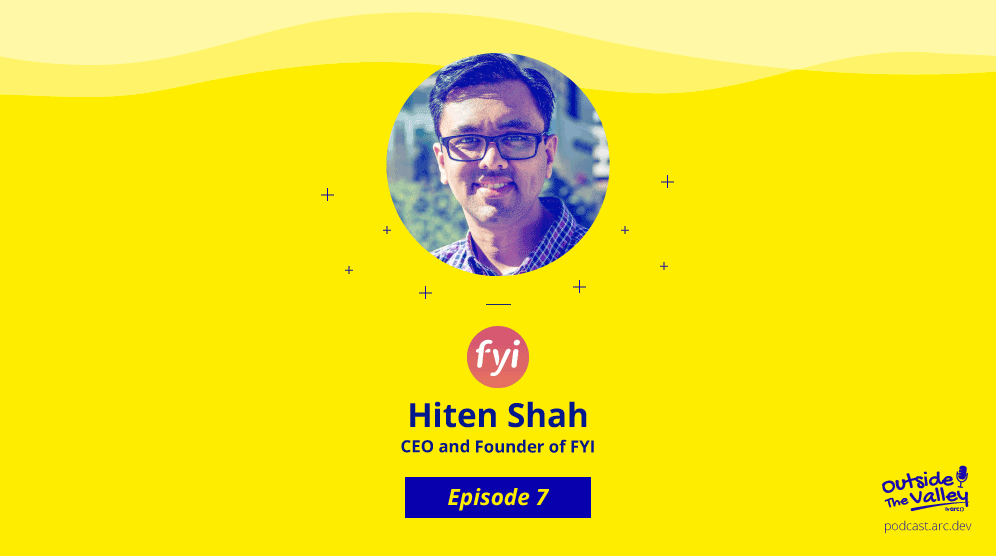

Summary: Hiten Shah has led remote teams since 2003, well before remote work was a mainstream option. His core message hasn’t changed with the times: don’t copy someone else’s remote playbook, figure out what actually works for you, your team, and your management style.
A note on this piece: this article is adapted from a long-form podcast interview. We’ve restructured it around Hiten’s core principles rather than the original episode format, since a raw transcript makes for a hard read as a standalone article. We’ve also updated a few details below where things have changed since the original conversation.
By 2026, most of the “remote work is new and scary” framing that dominated conversations a few years ago has faded, distributed teams are simply how a large share of tech companies operate now, often blended with AI tools that summarize meetings and turn conversations into searchable records automatically.
What hasn’t changed is the harder problem underneath all of it: process, communication, and trust don’t come for free just because everyone has better tools. Hiten Shah figured this out the hard way, starting a company in 2003 with a remote co-founder, well before “remote-first” was a category anyone was writing about. He went on to found Kissmetrics, Crazy Egg, and Quick Sprout, and later Nira, a document access-governance company that started life as FYI and was later acquired by Dropbox.
His core message across two decades of leading remote and hybrid teams hasn’t changed: figure out what actually works for you, rather than copying someone else’s remote work best practices wholesale.
Looking for top talent fast? See how Arc can help you:
⚡️ Find developers, designers, marketers, and more
⚡️ Freelance or full-time remote + fully vetted
⚡️ Save up to 58% with global hires
Hire top talent with Arc risk-free →
In this guide:
- Principle 1: Figure out what works for you, not what worked for someone else
- Principle 2: Focus on process, not tools
- Principle 3: Over-communicate on purpose
- Principle 4: Hiring is about “opting in”
- Principle 5: Give people real ownership over their own work
- Principle 6: Treat team health as the real challenge
Principle 1: Figure Out What Works for You, Not What Worked for Someone Else
Hiten’s central piece of advice resists tidy summarization into a checklist, and that’s deliberate. “Figure out what works for you” sounds almost too simple, but it’s a direct response to how much generic remote-work advice treats every team as interchangeable.
If your personality, management style, or team structure aren’t naturally suited to remote work, Hiten’s advice is blunt: admit it, and find a solution that works for your specific situation rather than forcing a fit with someone else’s system.
That extends to how he thinks about helping individual team members find their own structure too. Rather than mandating a single company-wide routine, a manager’s job is to pay attention to what each person actually needs: whether that’s access to a coworking space, guidance on communicating with colleagues, or something else entirely. “I don’t like to make this complicated. I don’t like to provide a lot of structure,” Hiten said. “What I do like to do is pay attention to individual team members and their needs.”
Principle 2: Focus on Process, Not Tools
A recurring frustration Hiten pointed to is what he called the “shiny new thing syndrome,” teams reaching for a new tool because it’s exciting, without first figuring out whether it actually fits how they work.
“We really think through the process, not the tool,” he explained. “What is the process, not what is the tool, and will the tool work for our process?” This applies whether the tool in question is an analytics platform, a task management app, or a workplace messaging system. Adopting new tools without a clear process to plug them into just adds friction, not productivity, a lesson that’s arguably even more relevant now that teams have far more AI-powered tools competing for adoption than they did a few years ago.
Principle 3: Over-Communicate on Purpose
Remote teams famously struggle with communication, and Hiten’s advice on this is concrete rather than abstract. Over-communicating, in his view, means specific, repeatable habits:
- Repeat the things you say, especially key decisions or next steps.
- Make it explicit what happens after a meeting ends, don’t leave next steps implied.
- Confirm understanding directly: “Hey, can we make sure that we heard the same thing on this call?”
- Write things down, and follow up over email or a shared document when it matters.
“That repetition, that clarity,” Hiten said, “that’s really the best you can do” for making sure a distributed team stays genuinely aligned, rather than assuming alignment because everyone nodded on a call.
Principle 4: Hiring Is About “Opting In”
Asked how his hiring process has changed since 2003, Hiten pointed to one thing that’s stayed constant and one thing that’s changed completely.
What hasn’t changed: you still need to evaluate whether someone will genuinely be a good fit for how your team works. What has changed is your ability to actually do that evaluation before making a full-time commitment. The rise of freelance platforms and side-gig work has made it far easier to see how someone actually works with your team before hiring them outright.
Hiten’s process centers on exposing candidates to how the team actually operates, and then letting them decide whether it’s a fit: “We want them to opt into our environment, and that’s really the most important thing… I think for remote teams this is way more important than anything else.”
That includes being explicit about process-heavy realities of remote engineering work, like the expectation that engineers provide accurate timelines, rather than glossing over how the team actually functions day to day.
Principle 5: Give People Real Ownership Over Their Own Work
One of Hiten’s more specific management habits: he doesn’t own the agenda for his 1-on-1 meetings with direct reports, they do.
“I want them to own the document… It’s literally their job to figure out what they want to talk about because it’s their work, they own their work. I don’t own their work.” This isn’t just a scheduling preference, it’s a broader philosophy about where ownership should actually sit on a team, and Hiten frames it as advice worth adapting rather than copying exactly: know your own preference, whether that’s owning the agenda yourself or handing it off, and be explicit with your team about which one you’re doing.
Principle 6: Treat Team Health as the Real Challenge
Asked directly what his biggest challenge is after roughly two decades of running remote teams, Hiten didn’t point to a tool or a process gap. He pointed to people: “the number one challenge is really making the team healthy.”
Communication and social opportunities, isolation, and loneliness are the recurring themes that come up whenever people talk honestly about what’s hard about remote work, and Hiten’s framing is that these are ongoing management responsibilities, not problems you solve once and move past.
Read More: The Return-to-Office Debate in 2026: What the Evidence Says for Distributed Engineering Teams
Beyond the Tools
Hiten’s core advice hasn’t shifted with the tooling: know yourself, know your team, and be honest about what actually works rather than what’s supposed to work. Better AI-assisted tools for summarizing meetings, drafting written updates, and organizing async communication genuinely help with the mechanics of remote work in 2026. They don’t replace the harder work of building trust, giving people real ownership, and paying attention to whether your team is actually healthy, not just productive.
That’s arguably the most durable part of Hiten’s message: remote work was never really about the tools. It was always about the process, and about being honest with yourself about what your team actually needs.
You can also try Arc, your shortcut to the world’s best remote talent:
⚡️ Access 450,000 top developers, designers, and marketers
⚡️ Vetted and ready to interview
⚡️ Freelance or full-time