

Hiring engineers in 2026 is no longer a location problem but a speed, signal, and skills-validation one. Many teams still rely on outdated remote hiring platform workflows that rely on manual sourcing and resume screening, which slow down decision-making and cause qualified candidates to be missed.
Arc addresses this shift by combining vetted remote talent with faster hiring pipelines and global reach. Instead of relying on manual review, AI-supported sourcing and pre-screening help surface candidates with verified experience in areas like backend systems, AI engineering, and distributed systems.
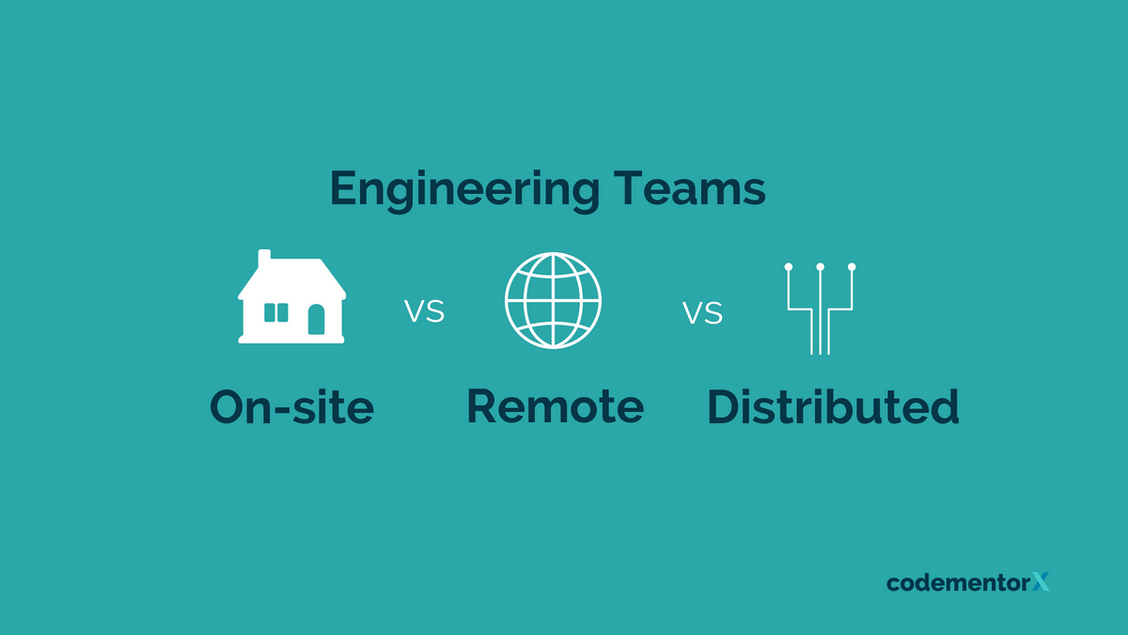
This guide breaks down the real differences between on-site, remote, and distributed models, including how to build a remote engineering team, evaluate candidates using skills-first hiring, and improve hiring velocity with asynchronous processes.
You’ll also see how modern teams use AI in sourcing, screening, and collaboration to choose the best structure for a software team. Stay tuned!
How to Hire Talent in 2026: AI Sourcing, Skills-First Evaluation, and Hiring Velocity
The way companies hire engineers has fundamentally changed. Success is no longer defined by how large your geographic talent pool is, but by how quickly you can identify proven skills and move candidates through a high-signal hiring process.
A modern distributed engineering team hiring strategy relies on AI-driven sourcing, skills-first evaluation, and optimized hiring velocity, not manual resume review.
- On-Site Teams: AI-Enhanced Local Hiring with Structured Evaluation
On-site teams are no longer limited to job boards and local networks. AI sourcing agents now scan both local and adjacent markets, identifying candidates open to relocation or hybrid work while prioritizing verified experience over keywords.
However, on-site hiring still depends on structured, synchronous evaluation loops:
- AI pre-screens candidates based on real project experience and tech stack alignment
- Candidates complete short, standardized technical assessments before interviews
- Final rounds happen on-site or in real-time to assess collaboration and communication
This model works best for companies that require physical presence, but it often results in longer hiring cycles. Even with AI assistance, coordinating interviews and relocation timelines slows overall velocity compared to distributed models.
- Distributed Teams: Global AI Sourcing + Skills-First Hiring at Scale
Distributed teams have the strongest advantage in modern hiring because they combine global reach with asynchronous evaluation. AI sourcing agents continuously scan international talent pools, ranking candidates based on demonstrated skills rather than location or credentials.
A strong distributed engineering team hiring strategy typically includes:
- AI-driven sourcing across global markets to surface hard-to-find skill sets
- Async coding challenges that simulate real work instead of theoretical problems
- Portfolio and project-based evaluation instead of resume filtering
- Time zone–aware interview workflows that remove scheduling bottlenecks
This approach aligns directly with skills-based hiring, where decisions are based on what candidates can do, not where they’ve worked. It also allows companies to access specialized talent — including AI engineers and senior backend developers — without geographic constraints.
- Remote Teams: Hybrid Flexibility with Centralized Hiring Standards
Remote teams sit between on-site and distributed models. They often maintain a headquarters but hire across regions, using AI tools to expand sourcing beyond commuting distance.
In practice, remote hiring combines elements of both models:
- AI sourcing expands candidate reach beyond local markets
- Skills-first assessments standardize evaluation across locations
- A mix of async and live interviews balances speed with team alignment
For companies choosing a remote vs on-site model, this hybrid approach offers flexibility without fully redesigning hiring infrastructure. However, it requires clear processes to avoid inconsistencies in candidate evaluation.
Hiring Velocity: Why Distributed Teams Move Faster
Hiring speed is now a competitive advantage. The difference between securing a top engineer and losing them often comes down to how quickly you can evaluate and make an offer.
Here’s how each model compares:
| Team Model | Sourcing Speed | Evaluation Style | Time-to-Hire Impact |
| On-site | Moderate | Fully synchronous | Slower due to scheduling and relocation |
| Remote | Fast | Hybrid (async + live) | متوسط speed with some coordination delays |
| Distributed | Fastest | Mostly asynchronous | Fastest due to continuous pipelines |
Distributed teams win on velocity because they remove unnecessary waiting:
- Async assessments allow candidates to complete tasks without scheduling delays
- AI screening reduces the time spent reviewing unqualified applicants
- Continuous pipelines mean roles are filled as soon as a match is found
If you’re wondering how to build a remote engineering team, this is the critical shift: hiring is no longer a sequence of steps, but an always-on system.
Improving Communication with AI-Powered Collaboration
Communication is no longer just about chat tools, but about how effectively teams share context across time zones. Modern engineering teams now use AI-powered collaboration tools to reduce friction and improve decision-making.
Distributed and remote teams are adopting:
- AI meeting summaries that capture decisions and action items automatically
- Smart documentation tools that surface relevant code, tickets, and discussions
- Async video and voice updates to replace unnecessary meetings
These tools support asynchronous work, which is essential for scaling distributed teams. While on-site teams still benefit from real-time interaction, they are adopting AI-enhanced workflows to reduce meeting overhead and improve clarity.
How Top Companies Structure Engineering Teams in 2026
The line between on-site, remote, and distributed teams has blurred as companies adapt to global hiring:
- Many enterprise companies now operate hybrid models with distributed engineering hubs across regions
- Remote-first companies continue to scale globally using async workflows and AI-supported hiring
- Distributed-native companies operate without a headquarters, hiring purely based on skill and availability
These shifts reflect a broader trend: companies are optimizing for access to talent and speed of execution, not physical location.
What This Means for Choosing the Right Model
When evaluating on-site vs remote team pros and cons, the key question is no longer “Where should people work?” but “How fast can we identify and hire the right skills?”
The best structure for a software team depends on:
- How quickly do you need to hire specialized talent
- Whether your workflows support async collaboration
- How much do you rely on real-time vs independent execution
In a high-velocity hiring market, distributed and remote models consistently outperform traditional approaches because they align with AI-driven sourcing, skills-first evaluation, and continuous hiring pipelines.
The Smartest Way to Hire Engineering Talent in 2026
Choosing between on-site, remote, and distributed teams is no longer about preference, but about execution speed and access to verified skills. Companies that adopt AI-driven sourcing and skills-first evaluation consistently outperform those relying on manual screening and location-based hiring.
Arc helps hiring teams move faster by combining vetted global talent with structured, high-signal evaluation workflows. Instead of building sourcing pipelines from scratch, you can access pre-qualified developers and run streamlined hiring processes that align with modern distributed engineering team hiring strategy requirements.
If you’re deciding how to build a remote engineering team or optimize your current structure, the priority is clear: shorten time-to-hire without compromising quality. Access vetted global talent already matched to your role.
Frequently Asked Questions
How do companies use AI to hire remote developers faster?
Companies use AI sourcing agents to scan global talent pools and rank candidates based on verified skills, not keywords. This reduces manual screening time and surfaces qualified developers within hours instead of weeks. Combined with async assessments, teams can move from sourcing to interview in under 3–5 days.
What is skills-based hiring for engineering teams?
Skills-based hiring evaluates candidates through real-world tasks like coding challenges, system design exercises, or portfolio reviews. Instead of relying on resumes or credentials, hiring managers assess how well a candidate performs in job-relevant scenarios. This approach improves hiring accuracy, especially for distributed teams using async evaluations.
How does a distributed engineering team hiring strategy improve hiring outcomes?
A distributed engineering team hiring strategy expands access to global talent while enabling asynchronous hiring workflows. Teams can evaluate candidates across time zones without scheduling delays, which increases both speed and candidate quality. This model is especially effective for hiring specialized roles like AI engineers or senior backend developers.
Is hiring remote developers faster than hiring on-site?
Yes, hiring remote developers is typically faster because it removes relocation constraints and allows for async evaluation steps. While on-site roles often require coordinated interviews and longer decision cycles, remote processes can reduce time-to-hire to under two weeks. Distributed teams can move even faster by running continuous hiring pipelines.
What is the best structure for a software team in 2026?
The best structure for a software team depends on hiring speed, role specialization, and collaboration needs. Distributed and remote models perform best for accessing global talent and scaling quickly, while on-site teams may suit roles requiring physical presence. Most companies now adopt hybrid or distributed-first approaches to balance flexibility and execution.
How can I build a remote engineering team quickly?
To build a remote engineering team quickly, start with AI-driven sourcing to identify qualified candidates across regions. Use async coding challenges and structured interviews to evaluate skills without scheduling delays. Focus on reducing bottlenecks in screening and decision-making to keep your hiring cycle under 7–14 days.
What tools improve communication in distributed engineering teams?
Modern distributed teams use AI-powered collaboration tools that summarize meetings, organize documentation, and enable async updates. These tools reduce reliance on real-time meetings and help teams stay aligned across time zones. If you’re scaling a distributed team, adopting async-first communication is critical to maintaining productivity.
If you’re ready to improve hiring speed and quality, start by evaluating your current process for bottlenecks and shifting toward skills-first, async workflows.